What Is A Tier List?
A tier list is a ranking format that sorts things into levels instead of giving every item a strict number.
The format is simple: put the strongest, best, or most preferred items at the top, then place everything else into lower tiers. Most tier lists use labels like S, A, B, C, D, and sometimes F.
In plain English: a tier list answers one question. What belongs at the top, what is still good, and what sits lower?
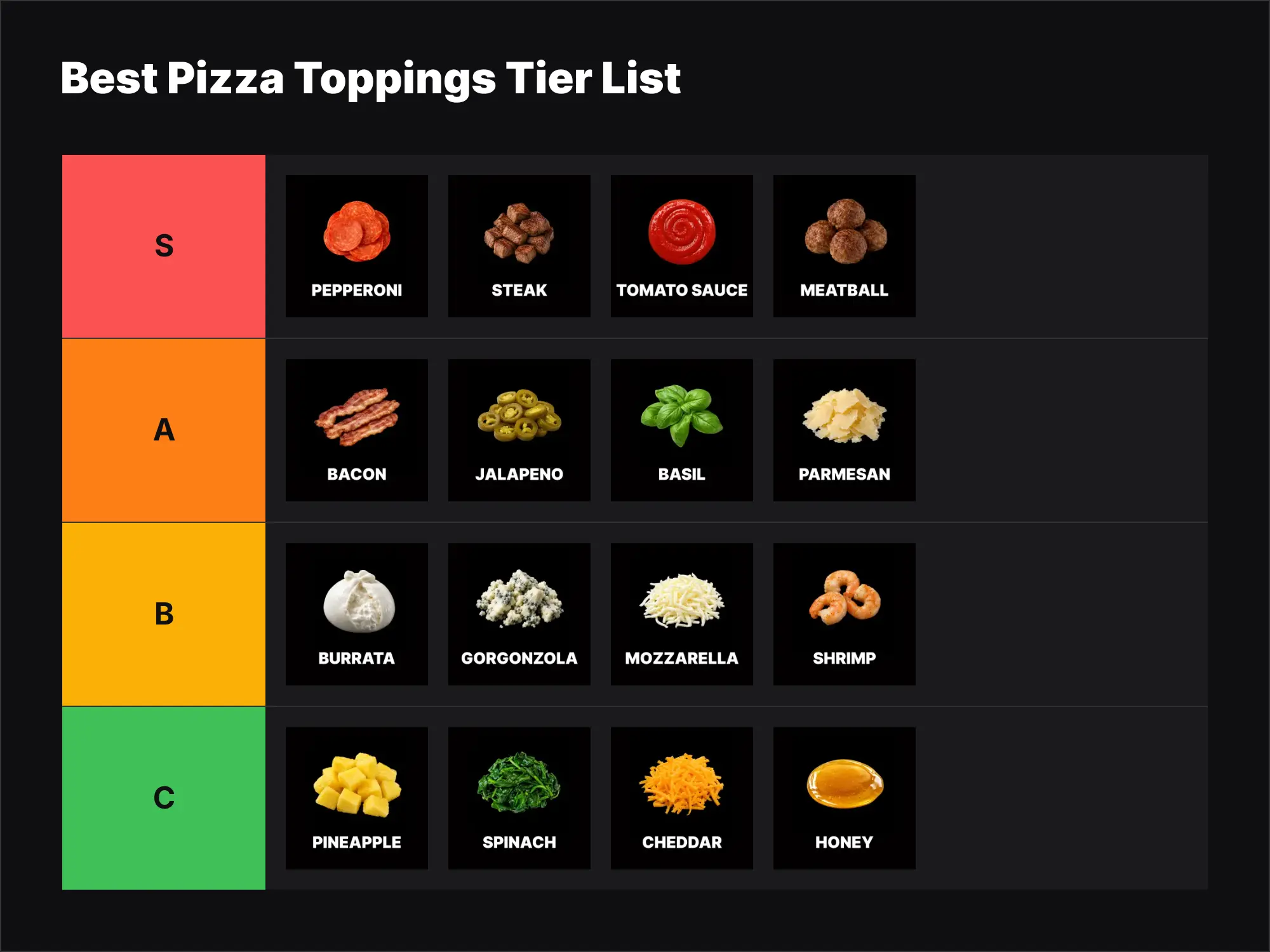
Tier lists started as a gaming habit, but they are no longer only about games. People use them for characters, weapons, songs, movies, foods, brands, sports teams, productivity tools, memes, and almost anything else that can be compared.
Tier list meaning
The word "tier" means a level, layer, or rank. A tier list is exactly that: a list organized by levels.
Most tier lists use a structure like this:
| Tier | Common meaning |
|---|---|
| S tier | The best, exceptional, or meta-defining |
| A tier | Very strong, reliable, or highly recommended |
| B tier | Good, but not the best |
| C tier | Average, situational, or flawed |
| D tier | Weak, rarely worth choosing |
| F tier | The bottom rank, usually avoided |
The labels can change. A food tier list might use "Perfect," "Great," and "Never again." A game tier list might use "Top tier," "High tier," "Mid tier," and "Low tier."
The idea stays the same. Items are grouped by relative value.
When did tier lists start?
There is no single official birthday for the tier list.
The culture grew gradually from competitive gaming, especially fighting games. Street Fighter II was released in 1991, and games like Street Fighter, Mortal Kombat, Tekken, and Super Smash Bros. created the perfect environment for tier lists. Players had characters to compare, matchups to debate, and tournament results to study.
By the early 2000s, tier lists were already part of competitive forum culture. SmashWiki records the first Super Smash Bros. Melee tier list on October 8, 2002. Know Your Meme notes that tier lists likely existed earlier, while one archived example it highlights was posted to a Tekken community site on March 25, 2005.
So the cleanest answer is this:
Tier list culture started in competitive gaming communities in the 1990s, became visible online through forum-era gaming communities in the early 2000s, and moved into mainstream internet culture in the 2010s as ranking templates became easier to create and share.
How does a tier list work?
A tier list works by comparing every item against the same standard.
For a competitive fighting game, that standard might include:
- Matchup strength
- Tournament results
- Skill ceiling
- Consistency
- Counterplay
- Patch changes
- Expert player consensus
For a movie tier list, the standard might be completely different:
- Personal enjoyment
- Rewatch value
- Acting
- Pacing
- Visual style
- Cultural impact
The format is flexible. The important part is consistency. If one item is ranked by power, every item should be ranked by power. If one item is ranked by personal taste, every item should be ranked by personal taste.
What makes tier lists so popular?
Tier lists are popular because they are simple, visual, and easy to react to.
They compress a lot of opinion into one image. You can understand someone's taste or strategy in seconds. You can agree with it, argue with it, remix it, or make your own version.
That makes tier lists useful for a lot of situations:
- Fast comparison
- Community discussion
- Personal recommendations
- Competitive analysis
- Content creation
- Social sharing
They also invite participation. A tier list rarely feels like the final answer. It usually feels like the start of the conversation.
Are tier lists objective?
Some are. Most are not fully objective.
Competitive gaming tier lists can use tournament data, matchup charts, patch notes, and expert consensus. Even then, they depend on assumptions: equal player skill, current meta, available strategies, and the version of the game being played.
Personal tier lists are different. A "best fast food fries" tier list is mostly taste. A "best productivity apps" tier list may mix preference with practical criteria.
Neither is wrong. The key is being honest about what the list is ranking.
Final thought
A tier list is a visual ranking system, but the culture around it is bigger than the format.
It is part analysis, part debate, part taste, and part internet ritual. Whether you are ranking fighting game characters or your favorite snacks, the point is not only to decide what is best. The point is to show how you think.
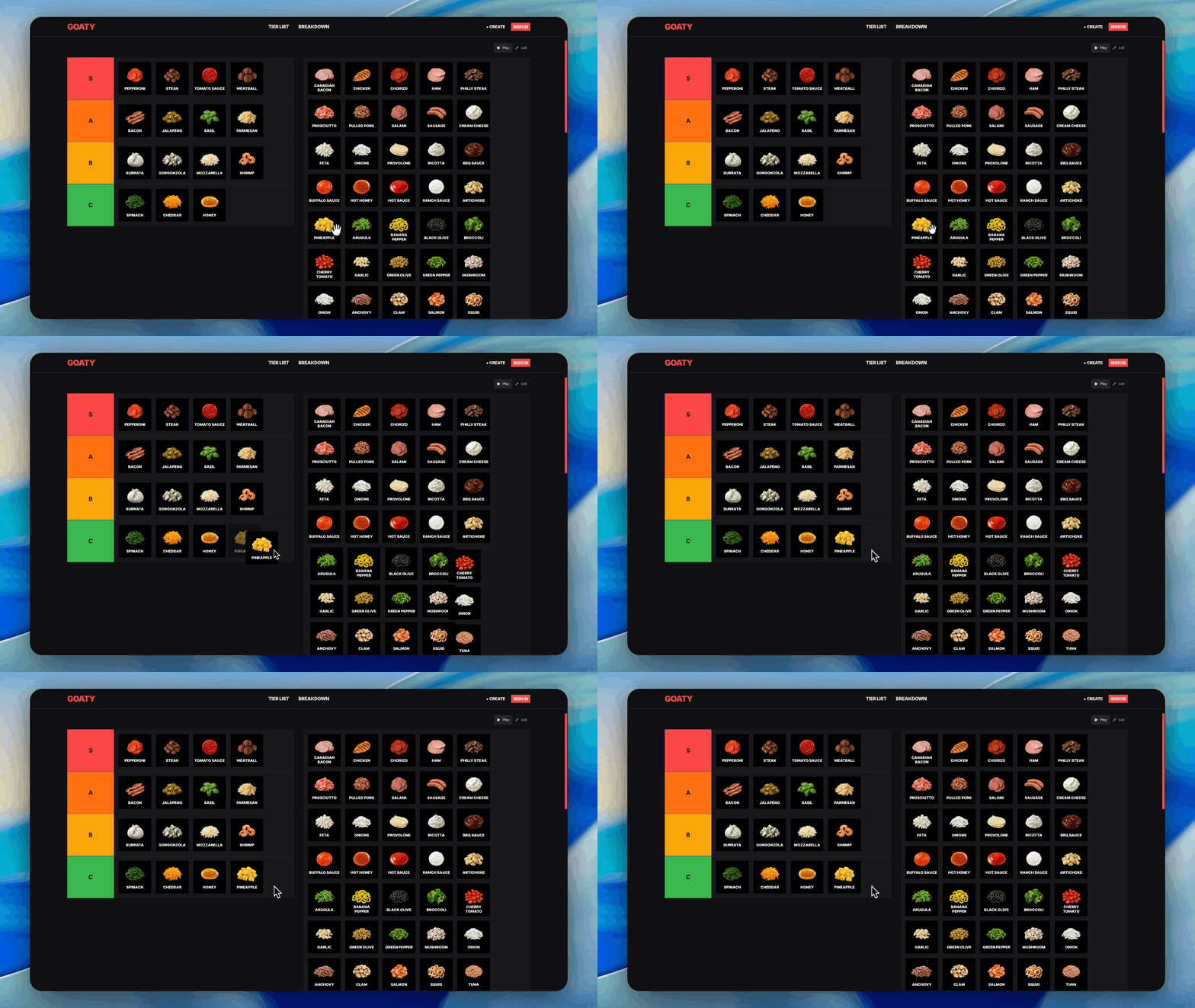
GOATY is built for that exact flow. It makes tier lists easy to create, efficient to manage, and simple to share. Start with a template, customize the details, save your result, and turn a quick ranking into something your community can actually use.